Ohio Minority Supplier Development Council

Thirty-Five Years of Proving What’s Possible: How UNICON’s Jane Lee Turned a Two-Year Leave Into a Legacy

Pei-Chen Jane Lee came to Columbus from Taiwan for graduate school, built a career at AT&T Bell Laboratories, and launched UNICON International in 1990. What started as a one-placement-at-a-time IT staffing firm has grown into a full-service provider of workforce staffing, IT solutions, and managed services, with Fortune 500 client relationships spanning more than two decades.

For more than three decades, UNICON International, Inc. (UNICON) has quietly built a reputation as one of Ohio’s most trusted workforce and IT services firms. The company has served clients like American Honda Motor Co.  (Honda) and American Electric Power (AEP) for over two decades, won multiple OMSDC awards, and evolved from a specialized IT staffing firm into a full-service provider of workforce staffing. IT solutions, and managed services.

Behind that growth is founder Pei-Chen Jane Lee (Jane), an immigrant from Taiwan. She came to Columbus Ohio for graduate school with nothing but a dream and began her career at AT&T Bell Laboratories.  On the first day of her first job, her assigned mentor told her he couldn’t understand her English. He had been one of the people who interviewed and hired her for the job. “I was crushed,” Jane recalls. She stopped asking him questions after that. But by the end of that first year, the same mentor asked Jane to review his performance write-up before he submitted it. “I was shocked,” she says. “But at the same time, I felt flattered.”

There was also the co-worker who told her, “If you don’t like it here, go back to where you came from.” and later remarked, “You Asians are going to take over AT&T.” Jane looked around her work location. There were fewer than a dozen Asian Americans there. “Not until the day I become President of AT&T,” She replied calmly.

Those moments didn’t break Jane. Instead, they set her trajectory. “Very early on in my career, I set my goal,” Jane says. “I really wanted to prove to people that we, as minorities and women, can do an equally good job, if not better.”

She’s spent her entire career doing exactly that.

Five years after joining AT&T Bell Laboratories, Jane became the first Asian woman promoted to Technical Manager at her location. She managed large-scale real-time telecom projects and was eventually handed supplier management responsibilities on top of her technical leadership role. That dual assignment gave her something most founders don’t get before launching a business: an operator’s view of what a good supplier looks like from the buyer’s chair. She saw what clients needed and what suppliers often failed to deliver. And she started thinking she could do it better.

When AT&T Bell Laboratories later offered employees a special leave-of-absence program, two years with insurance and a held position, Jane initially thought she’d take six months off. She had two young children. The pace of corporate life had become relentless. But once she started exploring the idea of starting her own company, the possibilities took over. She used the full two years of leave. And she never went back.

In 1990, Jane officially launched UNICON as a lean IT staffing firm, built by technical engineers and managers from Bell Labs. They knew how to recruit technical talent because they were technical talent. The early model was deliberately low-risk: IT staffing, one placement at a time.

Then clients started asking for more. Project-based work came first. Then managed services. Then professional services, a category Jane initially resisted because it sat outside UNICON’s core IT identity. But the logic was hard to argue with. “We use recruiters internally. We use administrative staff. We know how to find those people,” she recalls. The expansion into professional services proved to be a success.

UNICON’s client relationships are long-term. Honda has been a client for more than twenty years. AEP, the same. Contracts like those are renewed year after year because UNICON keeps earning the work. In a services business where switching costs are low and competitors are always calling, two-decade relationships are the strongest proof of performance a company can offer.

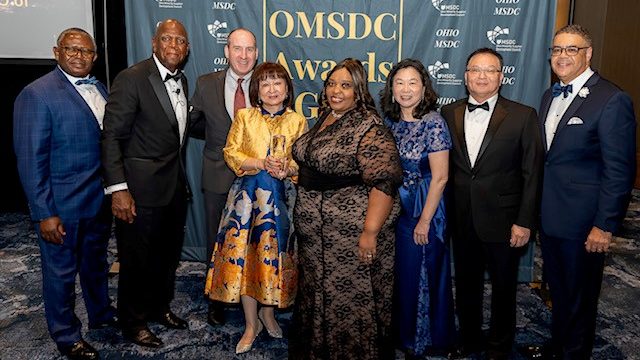
The recognition and awards followed. Over the years, Jane and UNICON have received numerous honors, including five or six from the Ohio Minority Supplier Development Council (OMSDC) alone. Yet for Jane, the awards themselves were never the most meaningful part of the journey. In fact, when George Sims, OMSDC’s President and CEO, encouraged her to apply for MBE of the Year, her first instinct was to step aside. “We’ve won too many awards,” she told him. “I want to give the opportunity to other newer MBEs.” Sims looked at her like she was kidding. She applied. She won. Again.

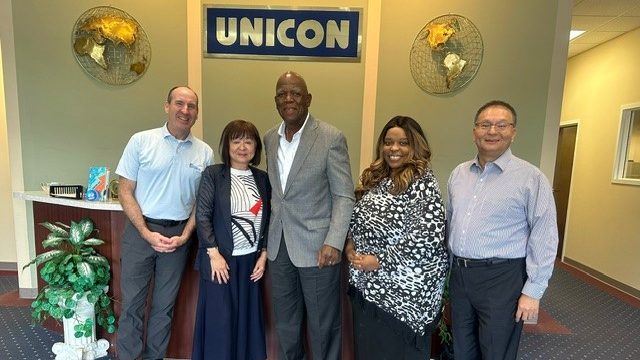
But what shaped Jane’s thinking about OMSDC wasn’t the trophies. It was a program called the Center of Excellence, chaired at the time by Abigail Kofete of Cardinal Health, now OMSDC Board Chair. The program paired corporate members with MBE suppliers in a year-long cohort that met monthly, rotating through corporate sites. UNICON was the only firm sponsored simultaneously by two Fortune 500 corporate members – Honda and Nationwide Insurance.

“That program was one of the best I’ve ever attended,” Jane says. The value went far beyond networking. It provided firsthand exposure to how major corporations actually operate: their procurement processes, priorities, expectations and internal language. Meetings were held at the sites of various participating corporate members, where executives often spoke directly with the MBEs. The result was the kind of buyer intelligence that no brochure or networking event can replicate.

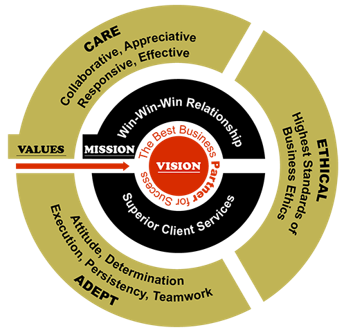
That understanding aligned naturally with Jane’s vision for UNICON: to be the “Best Business Partner for Success” for both clients and associates. Over the years, that philosophy has guided UNICON’s operations and culture. “The extremely positive feedback from our clients, associates and even job candidates made all of our hard work worthwhile,” Jane says.

UNICON’s next chapter is shaped by two forces pulling in different directions. The first is Artificial Intelligence (AI). Jane finds AI both exciting and unsettling. Her VP recently ran an experiment: after UNICON’s team finished a proposal the traditional way, he fed the same requirements into ChatGPT. The AI-generated version was, in her words, “equally good, if not better.”

That raises a question she thinks the entire services industry will have to answer: how do you differentiate a great supplier from someone who’s simply good at prompting?

The other force is legacy. Jane is direct about it. “I’m not getting any younger,” she says. “Before I become history, I hope I can contribute to making some differences.” That ambition extends beyond UNICON itself. She wants to help reshape how MBEs support one another, how corporate members create real opportunities instead of symbolic inclusion, and how organizations like OMSDC can advocate more effectively, especially as the policy landscape shifts.
She’s particularly clear-eyed about the gap between access and outcomes. OMSDC helped open doors by creating introductions and connections, she says. But turning those introductions into sustainable business relationships has always been the harder challenge. Too often, large corporations default to the assumption that bigger suppliers are safer and better suppliers. For MBEs, and for the organizations supporting them, the challenge is building enough proof, enough trust, and enough track records that buyers stop defaulting and start investing in capable local talent.

That’s what thirty-five years of showing up looks like. Not a single breakthrough moment, but a compounding record of delivering the results – over and over again that makes the next conversation easier than the last.

Jane is clear about what comes next. “How can we work together, between MBEs and corporations and organizations like OMSDC, to give every MBE the opportunity to prove themselves?” It’s not a rhetorical question. She’s been answering it for thirty-five years.

Jane’s legacy is clear. Showing up, doing the work, and leaving the door a little wider for whoever walks through it next.

How Can You Support OMSDC in Growing Ohio’s Economy?

If you’re an Ohio-based, minority-owned business ready to compete for larger contracts, or a buyer building a resilient, local supply base, connect with OMSDC. Start with certification, sourcing introductions, and practical guidance on the changing landscape: certification@ohiomsdc.org.

Have a success story you want to share? Email us at marketing@ohiomsdc.org or submit our story form.


Growth Under Pressure: Practical Operating Strategies for Minority-Owned Firms in a Tight Economy

Diverse business leaders and minority-owned firm executives reviewing financial reports and operational strategy during a corporate meeting, representing collaboration, financial planning, supply chain resilience, and growth strategies in a tight economy for minority-owned businesses.

In a tight economy, the phone rings less often. Proposals go out, but purchase orders take longer to come back, and the checks that used to arrive in 30 days now arrive in 55. Our new white paper, by Jamie Van Doren, Growth Under Pressure, examines what that slowdown actually looks like at the firm level — and what minority-owned firms can do about it. Used well, the playbook helps lean firms protect cash, win confidence faster, and build demand through the relationships they already have.

But the advantage only shows up when the response is operational, not rhetorical. The white paper highlights a few critical truths: pressure moves through time before it shows up in survival metrics, and the most consequential variables are days to decision, days to invoice, and days to payment. Minority-owned firms often face stacked exposure rather than a single disadvantage — smaller revenue bases, weaker financing outcomes, and a higher trust burden when entering new buyer systems. And relationships only become an economic asset when they’re structured. The takeaway is simple — the firms that grow under pressure run a pressure plan rather than a hope plan, not by selling harder but by converting faster. Download our white paper and learn how.

Trend Watch: AI Is Getting Cheaper to Run. Infrastructure Is On Shaky Ground.

New efficiency breakthroughs could lower AI costs for everyone, but energy strain, grid limits, and war-driven supply disruptions will shape who benefits first.

by Jamie R. Van Doren

What’s Changed?

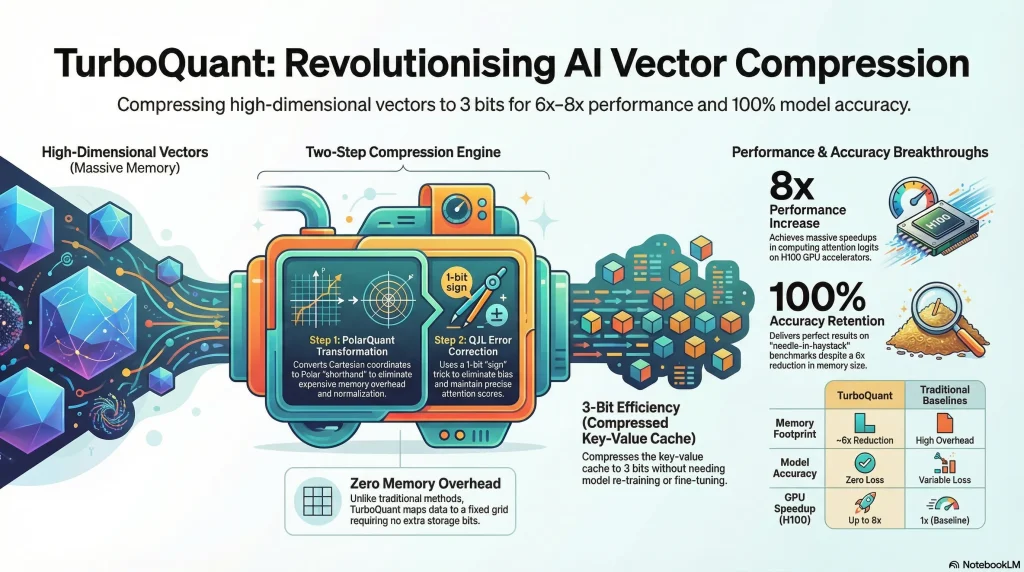
Last week, Google Research published a compression algorithm called TurboQuant that does something genuinely useful: it shrinks the working memory AI models need to operate — by roughly six times — without degrading performance. On Nvidia’s H100 chips, a version of the technique delivered up to an eightfold speedup in a key processing step. Memory chipmakers noticed. Within hours of the announcement, shares of Samsung, SK Hynix, and Micron all dropped, as traders recalculated just how much physical hardware the AI industry will actually need.

The internet, naturally, compared it to the fictional compression algorithm from HBO’s Silicon Valley. Fair enough. But the business implications are real.

TurboQuant is not an isolated event. It sits inside a broader pattern: AI models are getting smaller, faster, and cheaper to operate. Techniques like quantization, distillation, and compression have been steadily reducing the computing resources needed to run useful AI. What once required racks of specialized hardware is beginning to run on leaner setups: smaller cloud instances, edge devices, even laptops.

Google released TurboQuant under an open research framework, and community developers had already begun porting it to consumer-grade hardware within a day of the announcement. An official open-source release is expected in the second quarter of this year.

Full Credit Google Research

This is the efficiency side of the equation. And for smaller firms, it’s the side worth paying attention to.

But there’s also another side.

Why Does It Matter?

AI infrastructure is under strain. Not eventually. Right now. The U.S. Department of Energy projects AI energy demand will double or triple within the next few years, potentially reaching 12% of total national electricity consumption by 2028. The country’s largest grid operator, PJM Interconnection, which serves over 65 million people across 13 states, has warned it could be six gigawatts short of reliability requirements by 2027. For everyday Americans, that means being told not to run your air conditioner on the hottest day of the year. And if enough people ignore that request, it means rolling blackouts so the whole grid doesn’t go down.

Retail electricity prices have already risen more than 40% since 2019. Some of that is weather, regulation, and fuel costs. But data center demand is an accelerating factor, and utilities from Virginia to Ohio to Texas are scrambling to keep up.

Large tech companies are responding by locking in long-term energy contracts, investing directly in power generation, and competing for grid capacity in ways that smaller firms simply cannot replicate. Meta recently committed up to $27 billion in a single deal for dedicated compute infrastructure. Google, Microsoft, and Amazon are collectively planning hundreds of billions in data center capital expenditure through the end of this year alone.

There’s a less obvious ripple, too. Iranian strikes on Qatari gas infrastructure have knocked out roughly a third of global helium production — a gas most people associate with party balloons but that chipmakers need to manufacture the semiconductors AI runs on. Without helium, you can’t etch the chips that power data centers. Software can get more efficient, but it still needs hardware, and that hardware supply chain just got more fragile. Cheaper algorithms don’t help much if you can’t build the machines to run them on.

So, here’s the tension. AI is getting cheaper to run, yes. But the infrastructure that supports it is getting more expensive and much more constrained. Energy costs are climbing. Grid capacity is tightening. And now, war-driven supply chain disruptions are threatening the materials needed to build the hardware itself. Efficiency improvements like TurboQuant help at the software layer, but software runs on chips, chips run on power, and both of those supply chains just got more complicated. The bottleneck isn’t the algorithm anymore. It’s, well… everything else.

For MBEs, this creates a two-sided opening.

The opportunity: If useful AI tools require less memory and less compute, the cost of adoption drops. You don’t need a massive technology budget to use AI well. You don’t need to build anything from scratch. The tools that help you write faster proposals, run quicker competitive analysis, automate reporting, and tighten forecasting are getting better and cheaper at the same time. That lowers the barrier to entry in a meaningful way.

The risk: Infrastructure advantages compound. Companies that can secure compute capacity, negotiate energy contracts, and invest ahead of demand will operate with structural advantages that have nothing to do with intelligence or effort. If energy costs keep climbing and grid access remains uneven, operational resilience becomes a competitive differentiator, not just a nice-to-have.

It’s worth repeating on point in particular: recent war-driven energy shocks are a reminder that technology growth doesn’t happen in a vacuum. As oil, power, and materials markets tighten, operational resilience matters just as much as innovation. The AI economy depends on the physical economy, and the physical economy is under pressure from several directions at once.

What Should You Do?

For MBEs: focus on disciplined adoption, not ambition.

The advantage right now isn’t in building custom AI. It’s in applying existing tools to real bottlenecks. The companies that benefit won’t necessarily be the ones experimenting casually. They’ll be the ones building repeatable workflows with clear outputs and measurable time savings.

Where are you spending hours on work that a well-configured AI tool could cut by a third? Proposal drafting, compliance documentation, market research, internal reporting? These aren’t glamorous use cases, but they’re the ones that actually change how a small company operates day to day.

The right question isn’t “Are we using AI?” It’s “Can we point to specific outcomes that improved because of it?” If the answer is vague, the implementation isn’t working yet.

For corporate members: start looking at efficiency as a signal.

A supplier using AI well may not look different on a capabilities slide. But they’ll be more responsive. Their documentation will be cleaner. Their turnaround will be faster. Their communication will be more consistent. These are observable differences, and they’re worth weighting in supplier evaluation.

As AI becomes more accessible, the gap won’t be between companies that use it and those that don’t. It will be between companies that use it with discipline and those that treat it as a novelty. That distinction will show up in execution long before it shows up in an RFP/RFQ response.

OMSDC’s Upcoming AI Workshop Series

The Ohio Minority Supplier Development Council (OMSDC) is developing a practical AI series for MBEs and others. We want to hear what formats and topics would actually be useful. Take the short survey at the link below. Complete it and you can download the Competitor Analysis AI Workflow one-pager, a step-by-step guide with prompts and instructions you can put to work immediately.

Take the survey and download the workflow

Questions Worth Asking

For MBEs:

  • Where are you spending time that could be reduced by 30–50% with the right tools? And have you actually tested that?
  • Are you building repeatable AI workflows, or relying on ad hoc experimentation?
  • If energy and compute costs rise, does your operating model stay viable?

For corporate members:

  • Are your suppliers becoming measurably more efficient over time, or staying flat?
  • Are you evaluating responsiveness and operational clarity, or just price and scale?
  • How do you identify partners who are quietly improving their operations through technology?

For both:

  • If AI becomes cheaper and more accessible, what differentiates you?
  • If infrastructure becomes more constrained, how do you stay flexible?

The Takeaway

The efficiency race in AI is real. And it favors smaller, disciplined adopters more than most people realize. But it’s happening against a backdrop of physical constraints, energy, grid capacity, supply chain friction, that won’t resolve quickly. The companies that navigate both sides of that equation, getting leaner on the software side while staying resilient on the infrastructure side, are the ones best positioned for what comes next. The most advanced AI won’t necessarily be the differentiator. The most disciplined use of it will be.

From One-Man Shop to Multi-Million Pipeline: How Unified Building Technologies Turns Complex Jobs Into Turnkey Wins—and Community Impact

by Jamie R. Van Doren

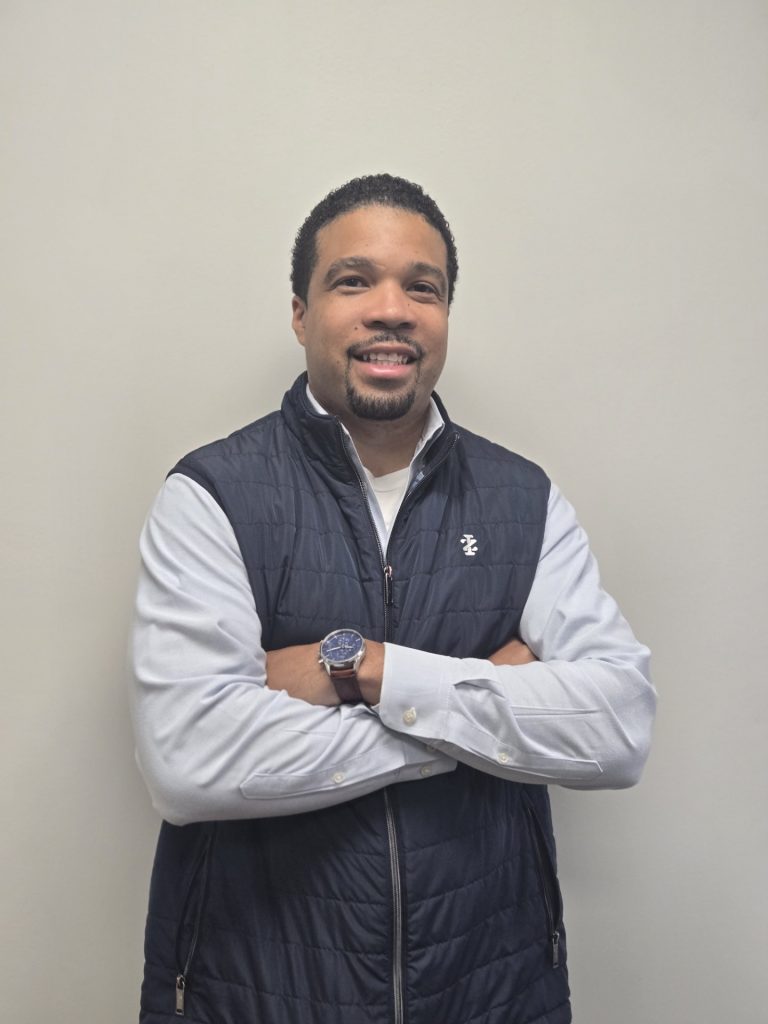
Unified Building Technologies launched in December 2023. By Q1 2025, revenue moved from about $60,000 in 2024 to roughly $600,000, with year-end pacing near $850,000 and $6 million in projects in the near pipeline. Unified Building Technologies became an OMSDC-certified MBE in April 2025 and immediately sponsored ConnectingOHIO.

The water in Kingman, Arizona, came out at ninety-five degrees, but the plants needed sixty-eight. A horticulture facility had the wells, the RO system, and the ambition—just not the cooling. When John Ramos stepped in, he didn’t just reach for a catalog SKU. He designed a solution.

That instinct to craft solutions, not just sales, has been shaped over time. Ramos started in HVAC at Stark State, earning an associate’s degree and the mentorship of two professors who pushed him to master both the technical and business sides of the field. Wholesale distribution followed at Robertson Heating Supply, where he learned how manufacturers think and why projects stall when design and lead times fall out of sync. Those lessons would matter later, when speed and availability became the difference between a fix and a failure.

Wadsworth Solutions drew him closer to the applied side—specification work, engineer relationships, and the kind of open-ended problems that reward initiative. In that “wild west,” as he puts it, Ramos saw a recurring need: owners needed one accountable person to design, procure, coordinate, and deliver. Meeting that need required a new structure and real capital.

With backing from Lion’s Share Company, a legacy Ohio organization, Unified Building Technologies took shape in December 2023. The partnership gave the young firm the scaffolding new contractors often lack—legal, bonding and insurance support, and working capital—while keeping Ramos’ design-build vision at the center. The result is a business that collapses seams. Unified Building Technologies folds engineering, procurement, and delivery under one roof so owners can move from problem to plan without losing time to handoffs.

The numbers tell part of the story. Unified Building Technologies recorded about $60,000 in 2024, then opened 2025 with roughly $600,000 in Q1. Their largest job this year landed around $400,000, and year-end should close near $850,000. Next year could reset the curve. 2026 projects, including an Arizona design-build chiller opportunity, will net them around $6 million, with more even opportunities forming behind it.

For now, scale is intentional and lean and Unified Building Technologies is exploring when and how to expand next. Ramos keeps engineering direction close, sketches solutions before sending them to licensed engineers for the stamp, and maintains direct lines to a few manufacturers for availability intelligence. Subs and partner “muscle” are brought in based on schedule and qualifications. He’s pursuing HVAC and hydronics licensure to bring commissioning and startup in-house. Acquisition is on the table for 2026, once recurring work can support a crew and a management layer. In other words, “crawl, walk, run”—not as a slogan, but as an operating system.

Certification fit that plan. Unified Building Technologies became an OMSDC-certified MBE in April 2025 and, on the same rhythm, stepped in as a ConnectingOHIO sponsor. The point wasn’t a piece of paper to hang on the wall. It was a key to more opportunities. In construction, you often compete with century-old legacy companies. Certification opens doors on the public side and signals credibility. It also plugs you into a network that shares the same goal: building a more resilient Ohio economy. Shortly after, Unified Building Technologies added City of Cleveland and CMHA certifications and won an initial CMHA job around $28,000—an entry made easier by validation and visibility.

The Kingman, AZ job shows how Ramos and Unified Building Technologies pulls these threads together. The owner needed to pull ninety-five-degree water down to sixty-eight on a tight clock. Ramos mapped a chiller strategy that could be built from available equipment and delivered on schedule. He coordinated design, lined up gear, managed subs, and drove commissioning. The fix looks straightforward in hindsight. It rarely does at the start.

ConnectingOHIO 2025 and 2026 extended the same logic to building business relationships. When Ramos decided to attend and sponsor ConnectingOHIO (Columbus, August 4 – 6, 2025) he didn’t expect a one-conversation contract. He went into the room with a plan and a purpose. He accomplished more than expected – leaving with a list of follow ups: primes, city contacts, healthcare systems who might be able to open the right doors at the right time. The challenge now is focus. A small firm can’t chase everything, so Ramos is picking lanes where design-build speed and procurement savvy create an edge. The callback is clear: the work of managing a $400,000 job looks a lot like managing a $4 million job. Coordination scales before headcount does.

Young multiracial people having fun stacking hands outdoor – Diversity and joyful lifestyle concept – Soft focus on african hand

Community impact is built into Ramos’ business model. He serves on four local boards, including United Way’s Community Impact Council, and helps steward a CDC that builds affordable housing for seniors. As Unified Building Technologies grows, that capital—and the jobs that follow—circulates locally. Dollars retained in the region multiply. Dollars that leave drain resources, as community capital flows elsewhere. Ramos, like many who advocate for more minority business investment, recognizes that supplier diversity isn’t charity. It’s how you keep the flywheel turning at home.

Policy shifts are changing the ground under every MBE. Ramos is tracking the moves on disadvantage standards and the downstream changes across cities and state reciprocity. What helps most, he says, is clear guidance and practical tools—especially if owners must document disadvantage narratives under new rules, like the Department of Transportation’s changes to Disadvantaged Business Enterprise definitions. Continued advocacy matters too, not only with government but with private buyers who still care about equity and need qualified suppliers to perform. The throughline for Unified Building Technologies’ remains: success depends on clarity, speed, and the right partnerships.

What should other MBEs take from Unified Building Technologies’ path? You don’t need a large payroll to start winning larger scopes. You need a clear value proposition, partners willing to share risk and support you, and a network (like OMSDC’s) that opens rooms you can’t open alone. Certification and event aren’t paperwork and parties. They’re how you gain credibility, build relationships, hear about a bid opportunity—and sometimes how you just get your foot in the door.

Ramos wrote a sponsorship check for ConnectingOHIO the moment his OMSDC certificate arrived because he sees the loop. “This community helps me grow, and I want my growth to help the community,” he says. “Let’s grow each other.”

How Can You Support OMSDC in Growing Ohio’s Economy?

If you’re an Ohio-based, minority-owned business ready to compete for larger contracts—or a buyer building a resilient, local supply base—connect with OMSDC. Start with certification, sourcing introductions, and practical guidance on the changing landscape: certification@ohiomsdc.org.

Have a success tory you want to share? Email us at marketing@ohiomsdc.org or submit our story form.
OMSDC 2026 Annual Meeting Builds Momentum for Businesses in the Region

by Jamie R. Van Doren

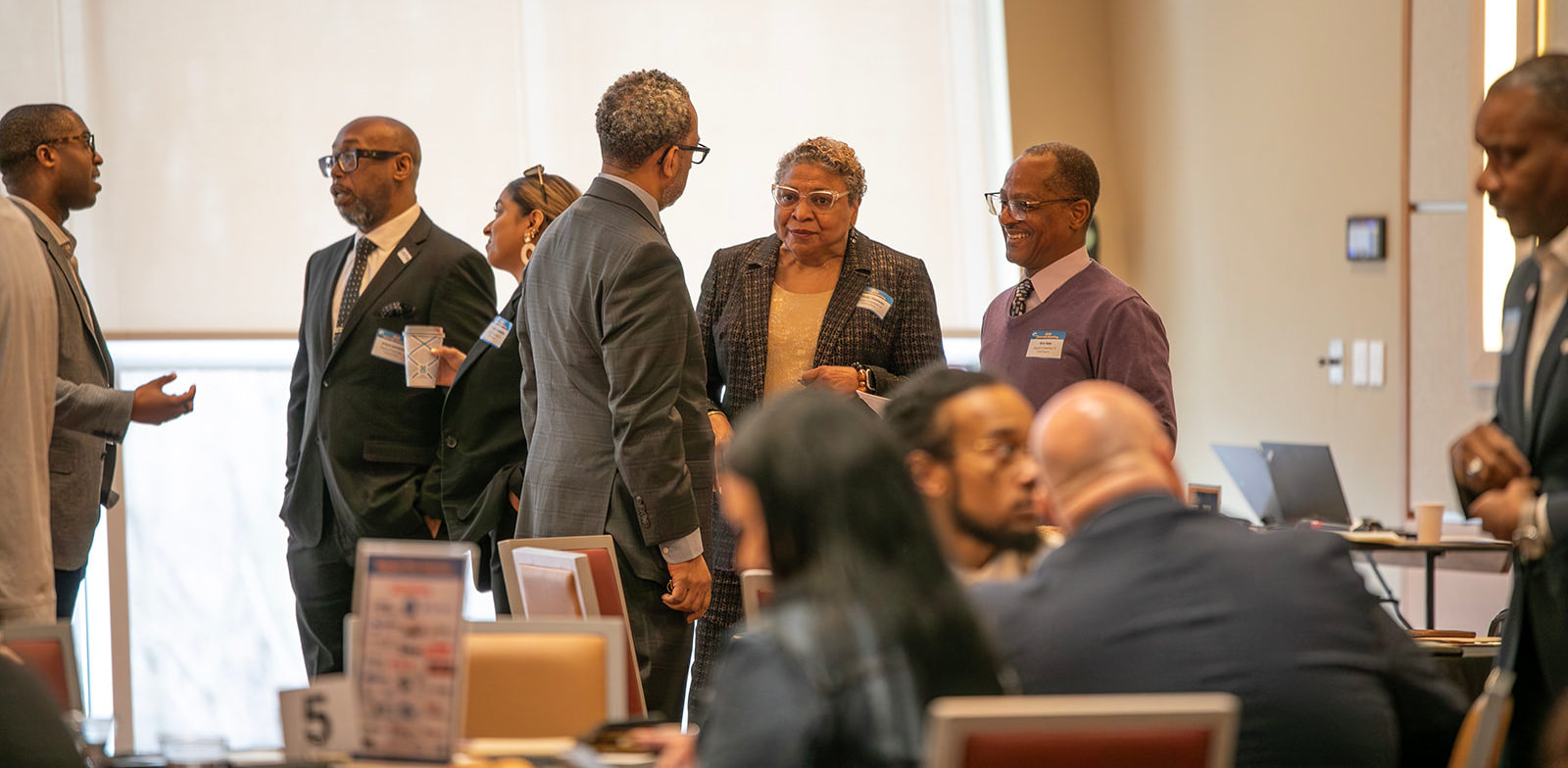
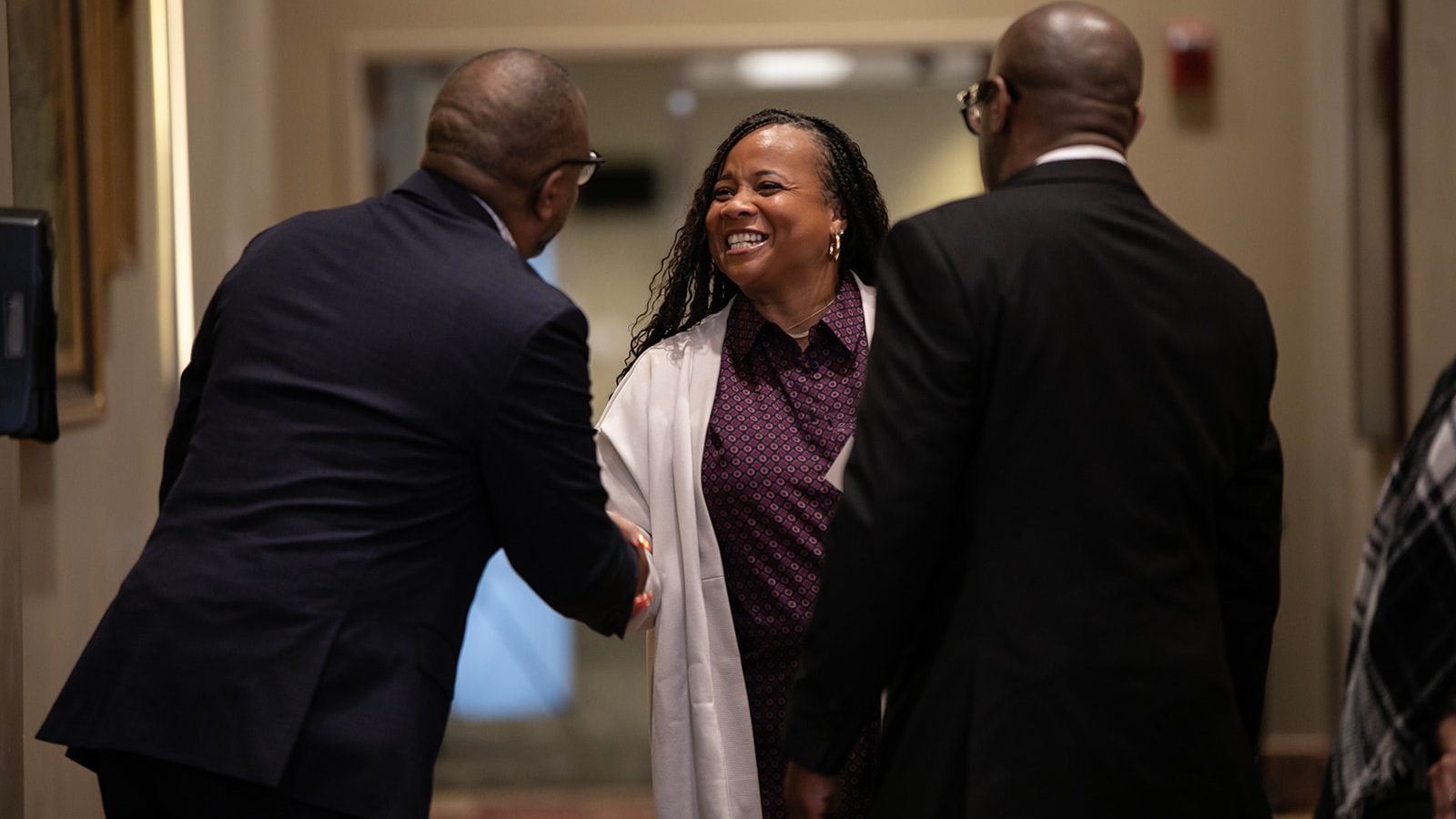
On March 19, leaders from across Ohio gathered at Central State University in Wilberforce for the 2026 OMSDC Annual Meeting. Corporate executives, certified minority business owners, community partners, and regional officials filled the room for a program grounded in a single consistent idea: that the work of building stronger businesses and more connected supply chains is not a matter of goodwill alone. It is a matter of strategy, discipline, and follow-through.

The theme was Building Bridges to Economic Equity. By the end of the day, it felt less like a slogan than a working description of what was actually happening in the room.

President and CEO George R. Simms opened with an honest account of where OMSDC stands. The prior year brought real headwinds. 2026 is being approached differently — with sharper focus on three areas: advocating for supplier inclusion as a measurable business outcome, improving the quality of connections between corporate members and certified MBEs, and building the capability of minority businesses to compete, deliver, and scale. The language is familiar. The discipline is being treated as new.


“Unbelievable.”

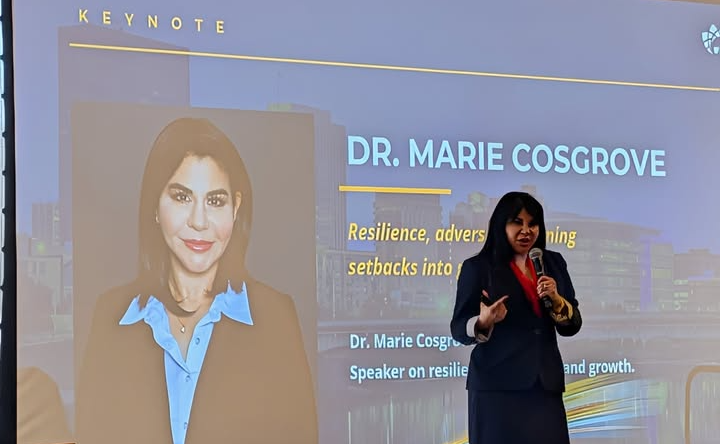
Dr. Marie Cosgrove, PhD, resilience expert and author of Greater Fortune: Essential Lessons from the Entrepreneur Who Bought the Company That Fired Her, delivered the keynote, and she opened with a question that everyone in business gets asked constantly. How is business?

Her answer was a single word. She said it, and she asked the room to say it with her: Unbelievable.

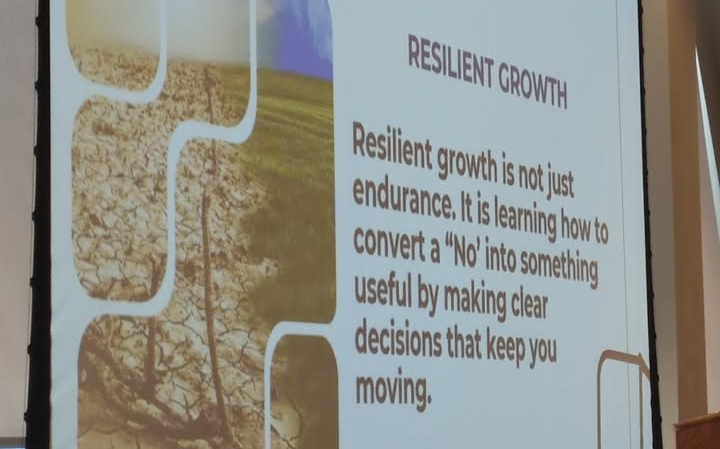
Not as a deflection. As a philosophy. Business is better than you ever imagined? Unbelievable. You are in the hardest stretch of your professional life? Also unbelievable. The word holds both, and that is precisely the point. The way you frame your circumstances shapes what you are able to do with them — and that framing is a choice you make, not a condition you inherit.

Dr. Cosgrove has earned that philosophy at close range. She shared the story of her own birth, which began with her mother’s survival of a devastating car accident in Mexico. The injuries were severe enough that doctors recommended removing her from life support. During her mother’s recovery, they also advised against continuing the pregnancy. Her mother refused both recommendations. She woke up. She carried the pregnancy to term. Dr. Cosgrove described this not simply as a miracle, but as the foundational act of tenacity that has defined her life’s work. The story carries a theological dimension she does not shy away from: hope, she told the room, is not something that precedes faith. They are the same thing. They are an orientation toward the possible, available even when the evidence points the other way.

The professional chapter of her story lands with equal force. She was a single mother of four when she pleaded for a commission-based sales position at balanceback™, a medical device company. She got the job. She was later fired. Not for underperforming, but for making too much in commissions. When the company told her to accept a pay cut, she declined. She was let go. Rather than treating the firing as a verdict, she treated it as a moment of forced reflection. She started her own company. Two years later, she bought balanceback™. Skeptics predicted she would bankrupt herself and the company within six months. Today, balanceback™ is recognized as a world leader in fall prevention and brain and balance disorder diagnostic and treatment devices.

The point she kept returning to was not that everything works out. It is that setbacks, handled with intention, create the conditions for a different kind of growth than ordinary progress ever requires.


Hardwiring Inclusion to Results

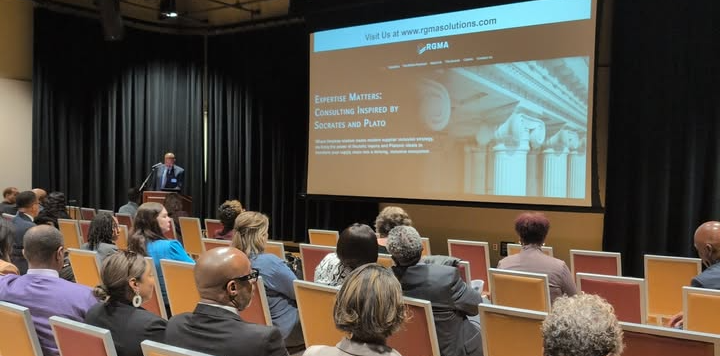
The Corporate Impact Lab was led by Ralph G. Moore, President of RGMA, a Chicago-based firm that has spent more than four decades helping corporations build supplier inclusion strategies that hold up to scrutiny. His session addressed a question that quietly frustrates a lot of supplier inclusion work: how do you actually measure it, and how do you make the case to leadership when the numbers have to compete with every other priority on the table?

Moore’s argument cut through the usual framing. This is not a conversation about good values. It is a conversation about shareholder return. Minority consumers represent the fastest-growing market segment in the United States. The gap between what corporations spend with minority suppliers — roughly two percent of procurement — and the share of future consumer revenue growth driven by minority households — projected at thirty to fifty percent — represents a material business risk, not just a missed opportunity. Supply chain resilience, innovation capacity, pricing competitiveness, and community purchasing power all connect back to inclusion in ways that can be measured and communicated in terms that survive a budget cycle.

For nonprofits and mission-driven organizations, Moore made clear that the same logic applies at a different level. Supplier inclusion is not adjacent to mission. It is a direct expression of it, and it can be documented as such.

His session gave corporate attendees a framework for bringing that conversation to their own leadership — and gave MBEs a clearer picture of how to position their value in terms that resonate on the other side of the table.


Working Smarter

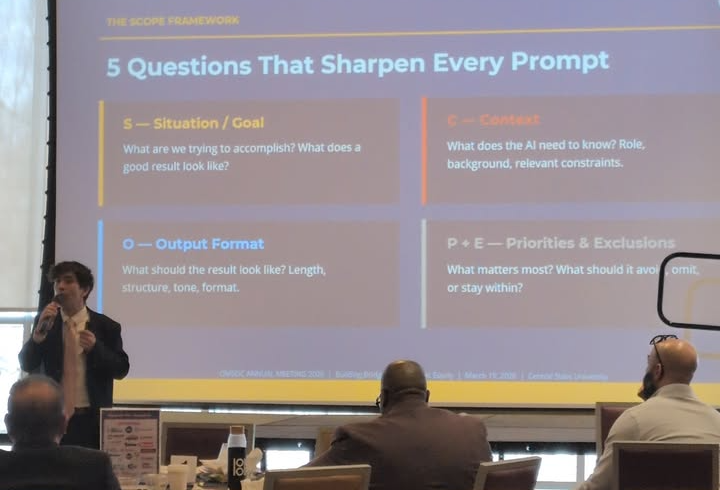
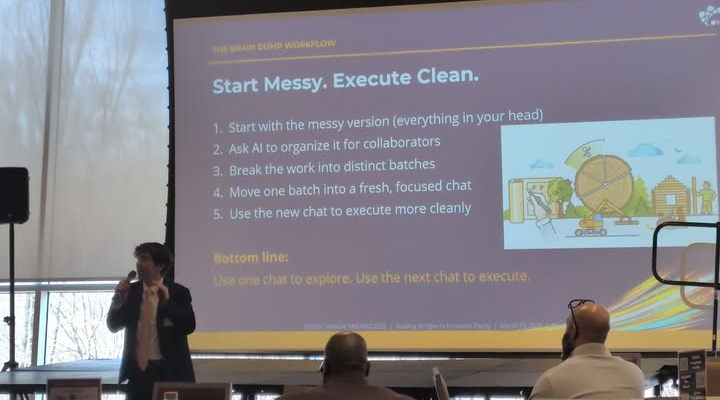
The MBE Impact Lab, facilitated by OMSDC’s Jamie Van Doren, focused on artificial intelligence as a practical business tool. The session addressed both the real risks of AI use (including context degradation, output drift, and the hard limits of machine judgment) and a working framework called SCOPE for structuring AI workflows in ways that produce more reliable, more usable results. Central to that conversation was a simple but counterintuitive principle: one chat, one job. Keeping each AI conversation focused on a single task, rather than letting a thread accumulate instructions, pivots, and prior outputs. The practice significantly reduces drift and hallucination while producing results that are more accurate and enterprise-ready.

Van Doren walked participants through a few steps of a live competitor and market analysis, using AI to map a competitive landscape, surface positioning opportunities. The ultimate outcome of the analysis being to help companies develop the kind of differentiation language that makes a corporate introduction land. The goal was direct: help MBEs ask for more, and give them something they could use the next morning.

That session was a first chapter, not a full course. OMSDC is developing a practical AI series for MBEs, and we want to hear what formats and topics would be most useful. A short survey is available at the link below. Those who complete it can download the Competitor Analysis AI Workflow one-pager — a step-by-step guide with detailed prompts and workflow instructions you can put to work immediately.

Take the survey and download the workflow


Connections Made Intentional

The afternoon also included the first pilot of MatchDesk, a curated one-on-one networking platform built to replace the randomness of open networking with something more deliberate. Forty-eight pre-scheduled meetings took place across the session. Not every introduction becomes an opportunity. The goal is to keep raising the number that do.

The Networking Reception, hosted by the Dayton Area Chamber of Commerce, gave the room space to continue what the structured sessions had started. Some of the most useful conversations of the day happen in those margins.

Learn more about MatchDesk, and if it’s right for your next event.


Thank You to Our Sponsors

The annual meeting doesn’t happen without the organizations willing to invest in it, and this year’s sponsor community reflected genuine commitment to the work.

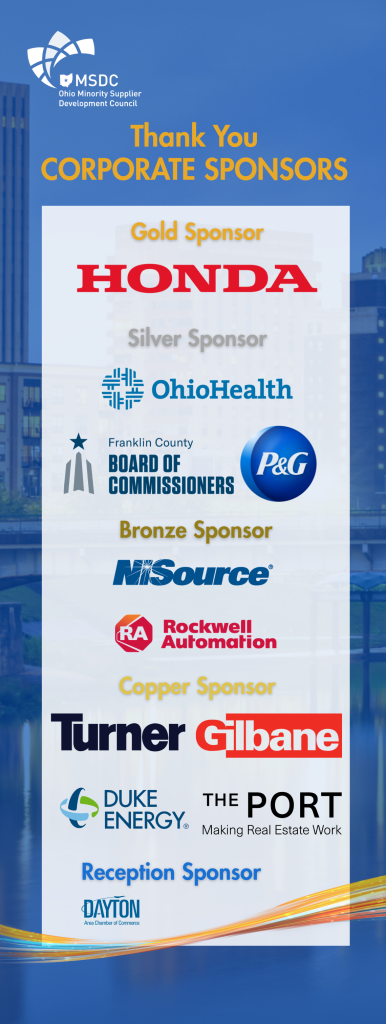
Honda anchored the program as the Empowerment Bundle Sponsor. Advancement Bundle Sponsors Franklin County Board of Commissioners, OhioHealth, and P&G provided essential program-level support. Investment Bundle Sponsors NiSource and Rockwell Automation, along with Advocate Bundle Sponsors Duke Energy, Gilbane, Turner Construction, and the Port of Greater Cincinnati, each contributed to making the day possible.

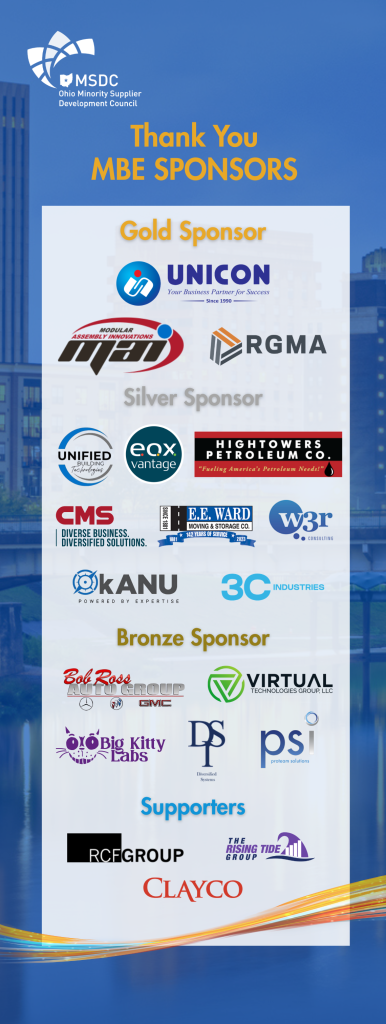
The investment of OMSDC’s own MBE community was equally visible. Vanguard Sponsor Unicon, Trendsetter Sponsors Commodity Management Services, EE Ward, EOX Vantage, Hightower Petroleum Co., kANU Investments, and Unified Building Technologies, and Innovator Sponsors Big Kitty Labs, Bob Ross Auto Group, Diversified System, and Virtual Technologies Group all brought meaningful support to the table. Supporter sponsors RCF and The Rising Tide Group rounded out the community. A note of appreciation as well to MAI, 3C Industries, and W3R, whose conversations about partnership reflect the kind of ongoing engagement that builds something over time.

The Dayton Area Chamber of Commerce hosted the Networking Reception. Capitaved Impressions documented the day.

The conversations that began in Wilberforce will continue. That’s the point of our work.